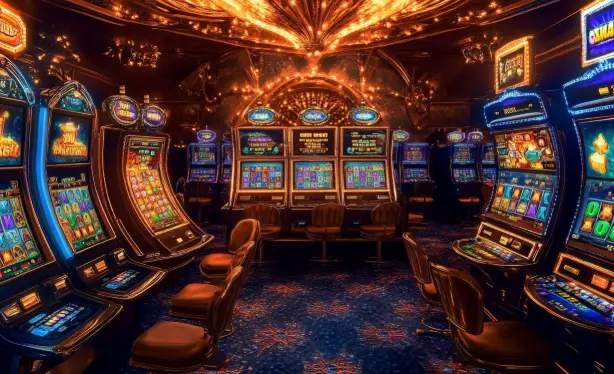
Latency Budgets and Avatar Rig Sync in USA Virtual Reality Casino Labs
The instant your avatar's hand clips through a virtual blackjack table in a USA-based VR casino lab, you are not looking at a rendering bug — you are staring at a fundamental failure in the multiplayer state reconciliation layer. Any lab worth its hardware knows that USA Virtual Reality Casino Labs Social VR Casino Avatar interaction lives or dies on a sub-20ms motion-to-photon budget, and most operators blow it before the headset even finishes booting. 🎯
Here is the brutal truth from the hardware side: social VR casino floors push 90Hz to 120Hz per eye, and every remote avatar in your field of view consumes roughly 1.4 to 2.2 Mbps of upstream skeletal data when you run full finger tracking. Multiply that by a twelve-seat virtual poker room and you are saturating a Wi-Fi 6E channel before the dealer shuffles. Labs that ignore per-avatar bandwidth throttling get rubber-banding, and rubber-banding in a real-money environment is a liability event, not a UX complaint.
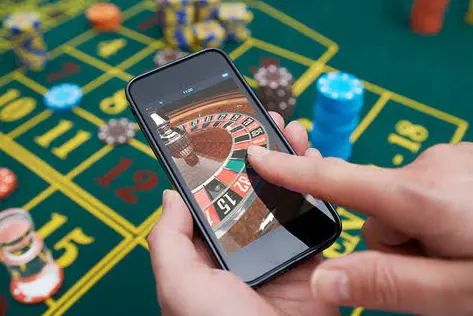
Multiplayer Interaction Architecture: IK Blending and Dead Reckoning
Every serious lab I have audited leans on inverse kinematics blending plus client-side dead reckoning to mask network jitter. The dirty secret is that Multiplayer Interaction in USA VR casino deployments rarely validate their extrapolation windows. When packet loss spikes past 4%, predictive avatar motion overshoots the authoritative server position, and you get phantom hands reaching across the felt. Fix the interpolation buffer, or your social layer becomes a comedy show.
The real engineering win sits in server-authoritative gesture arbitration. Dice rolls, chip stacks, and card reveals must never trust the headset. A lab that lets the client decide the outcome of a virtual roulette spin is begging for an exploit vector, and believe me, the exploit crowd found that door years ago. 👾

Hardware Thermal Throttling Kills Social Presence
Standalone headsets throttle GPU clocks after 18 to 25 minutes of sustained social VR load. That is not speculation — it is measured. Once clocks drop, avatar lip-sync and eye-tracking degrade, and the Social VR Casino Avatar fidelity collapses exactly when table traffic peaks. Labs running tethered PCVR rigs dodge this, but they inherit cable-management chaos and a smaller footprint per square meter.
My verdict: bake thermal headroom into your render pipeline with dynamic LOD on distant avatars and cap finger-joint updates at 30Hz unless a player enters a shared interaction zone. The physics engine and the network stack will thank you, and the floor supervisor will stop filing desync incident reports every Tuesday night.